
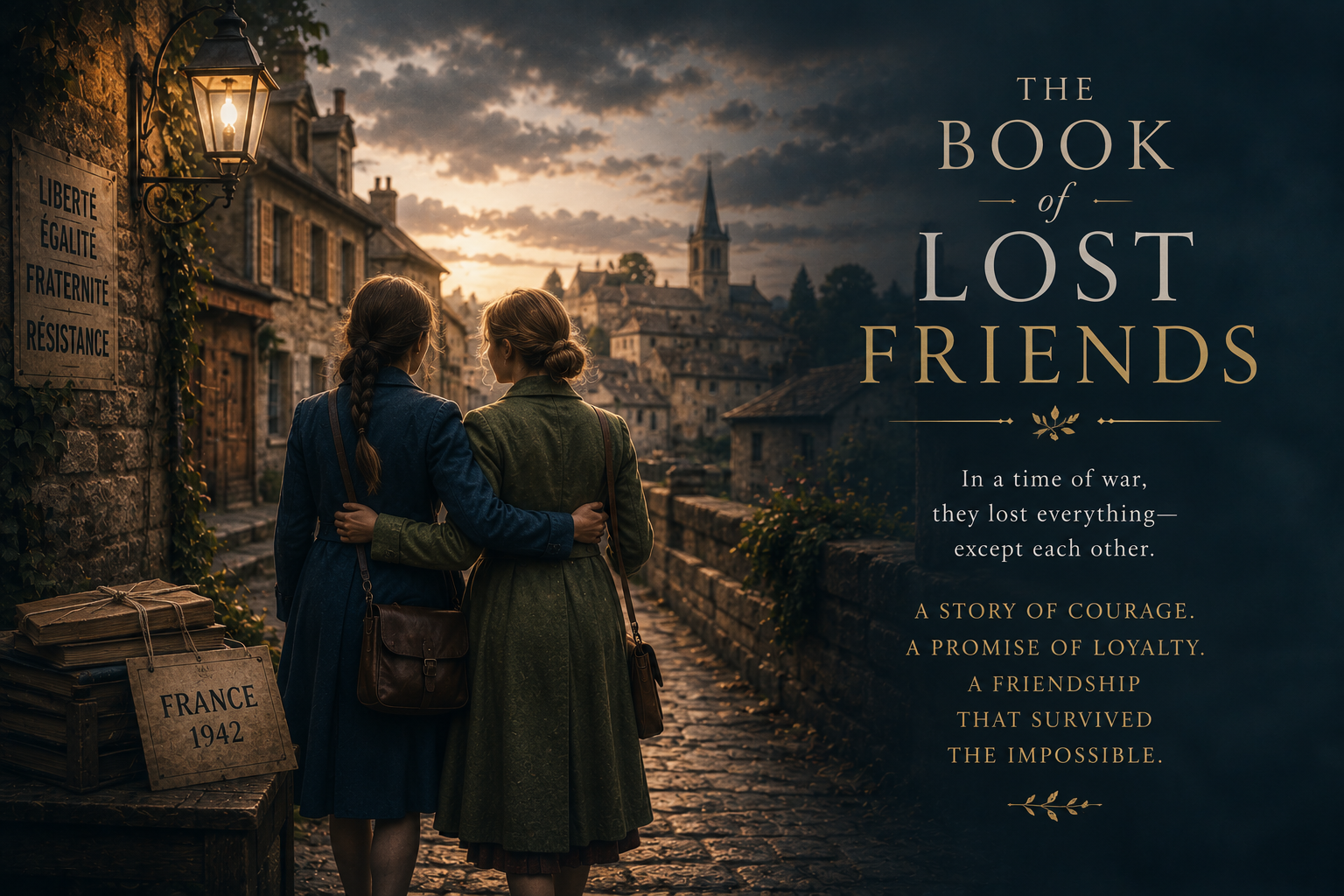
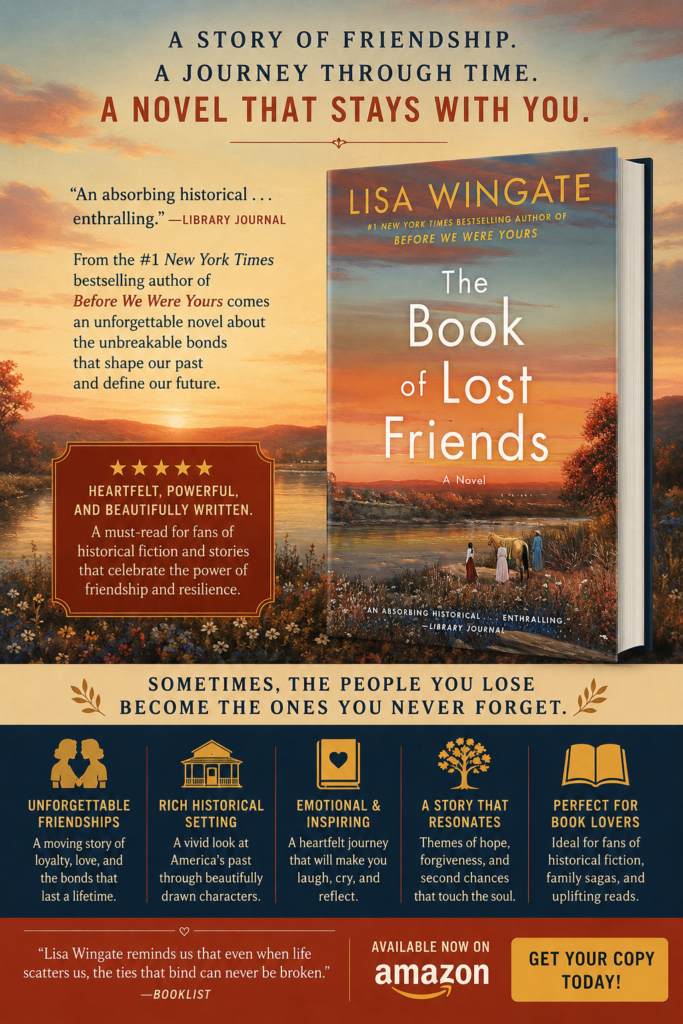
Lisa Wingate’s The Book of Lost Friends is a moving historical novel inspired by the real-life “Lost Friends” advertisements that appeared in Southern newspapers after the Civil War. It tells the story of three young women on a journey in 1875 and a modern-day teacher who discovers their history.
The Book of Lost Friends by Lisa Wingate – A Moving Story of Hope, Family, and Forgotten History
Historical fiction has the unique ability to bring overlooked chapters of history to life, and The Book of Lost Friends by Lisa Wingate does exactly that. Inspired by real historical events, this compelling novel explores the lasting impact of slavery, the importance of family, and the enduring hope of finding loved ones after unimaginable loss.
Written in simple and engaging language, the novel combines emotional storytelling with historical accuracy. As a result, readers are drawn into a powerful journey that connects the past with the present.
A Story Across Two Timelines
The novel follows two interconnected stories. One takes place shortly after the American Civil War, where three women embark on a dangerous journey across the South in search of lost family members. During their travels, they rely on newspaper advertisements known as the “Lost Friends” notices, which were real historical announcements placed by formerly enslaved people hoping to reconnect with relatives separated by slavery.
Meanwhile, the second storyline follows Benedicta Silva, a first-year teacher in modern-day Louisiana. As she uncovers the forgotten history of her community, she discovers how the past continues to shape the present. Eventually, the two narratives come together in a deeply satisfying and emotional conclusion.
What Makes This Book Stand Out?
One of the novel’s greatest strengths is its emotional storytelling. Lisa Wingate creates memorable characters whose struggles, resilience, and determination feel authentic and relatable. Consequently, readers become deeply invested in their journeys.
Another highlight is the author’s careful historical research. By incorporating the real “Lost Friends” advertisements, Wingate introduces readers to a little-known aspect of American history. Moreover, she blends factual events with fictional storytelling so naturally that the novel feels both educational and deeply personal.
The pacing is another strength. Although the story moves between two different timelines, the transitions are smooth and purposeful. Therefore, both storylines remain equally engaging throughout the book.
Are There Any Weaknesses?
While the dual timeline adds depth to the novel, some readers may need a few chapters to become comfortable switching between the historical and modern narratives.
Additionally, the story deals with difficult subjects, including slavery, racism, and loss. However, these themes are handled with sensitivity and contribute to the emotional power of the novel.
Who Should Read This Book?
The Book of Lost Friends is highly recommended for:
- Readers who enjoy historical fiction
- Fans of emotionally rich family stories
- Those interested in American history after the Civil War
- Readers who appreciate character-driven novels with meaningful themes
Final Verdict
The Book of Lost Friends is a beautifully written novel that celebrates hope, resilience, and the enduring bonds of family. Lisa Wingate masterfully combines historical research with heartfelt storytelling, creating a novel that is both informative and emotionally unforgettable.
Moreover, the book reminds readers that even after years of separation and hardship, hope can survive across generations. It is a powerful tribute to those whose voices and stories deserve to be remembered.
Rating: ⭐⭐⭐⭐⭐ (5/5)
If you enjoy historical fiction that combines compelling characters, meaningful history, and emotional depth, The Book of Lost Friends deserves a place on your reading list. It is an inspiring and unforgettable novel that will stay with you long after you turn the final page.
For more historical fiction reviews and top picks, visit topchoicesbooks.com.
Please note that, visual content on this page was generated using artificial intelligence tools. These images are for illustrative purposes and do not represent official publication artwork.
Comments (0)