
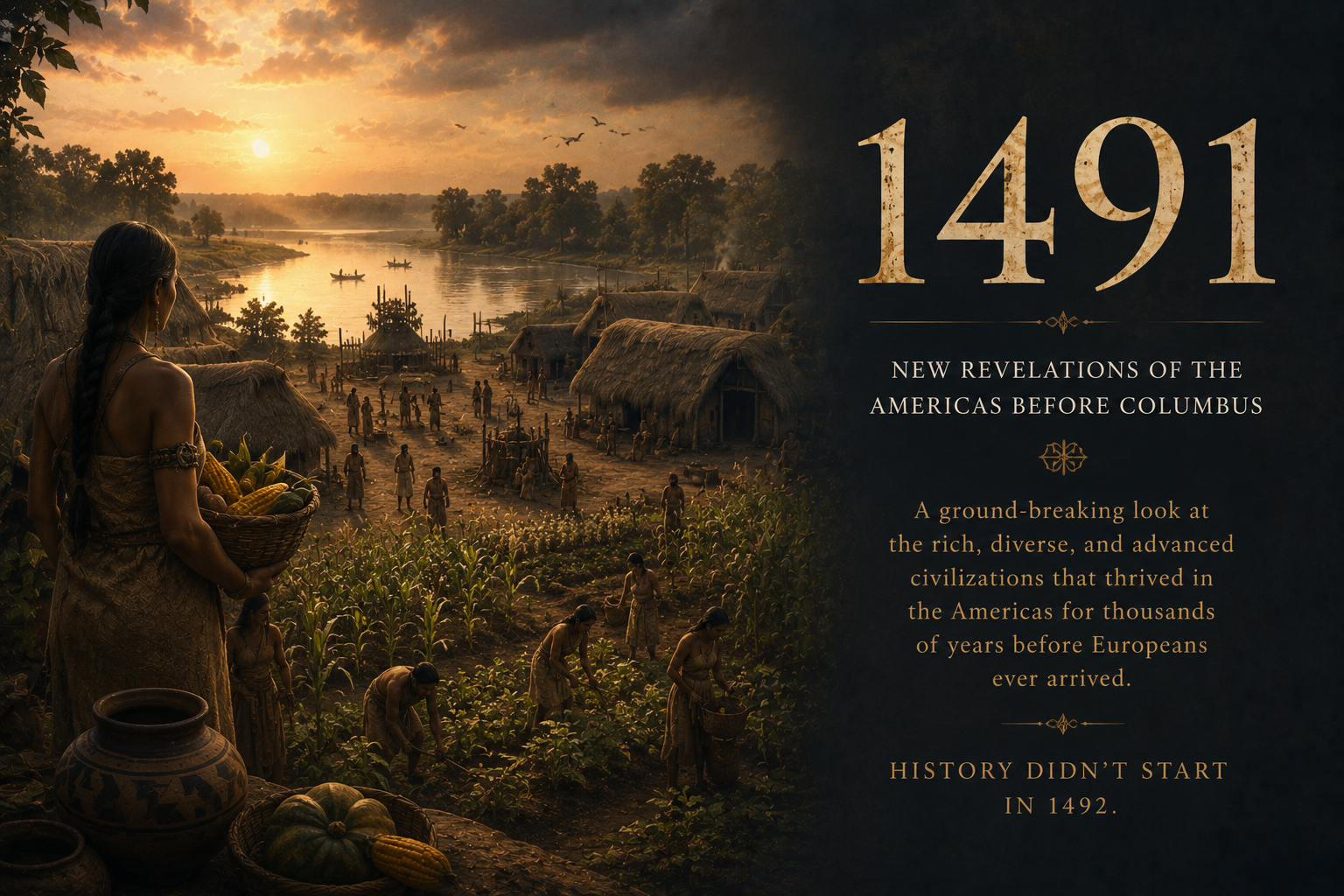
1491 Book Review | Charles C. Mann Explores the Americas Before Columbus
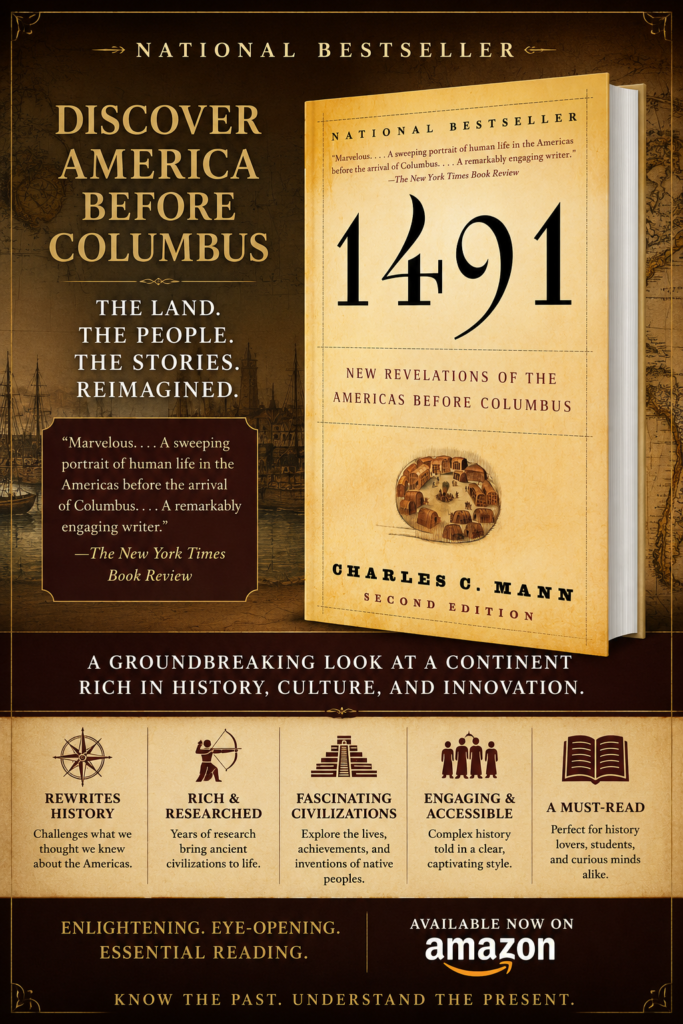
Read our 1491 book review and discover how Charles C. Mann challenges long-held beliefs about the Americas before Columbus.
1491 Book Review
What did the Americas look like before Christopher Columbus arrived? 1491: New Revelations of the Americas Before Columbus by Charles C. Mann offers a surprising answer. Drawing on modern archaeology, anthropology, and historical research, Mann challenges many traditional ideas about the indigenous peoples of North and South America.
Instead of presenting a land that was mostly untouched, the book reveals thriving civilizations, advanced farming techniques, and complex societies. As a result, readers gain a fresh understanding of a history that is often overlooked.
If you enjoy history, archaeology, or cultural studies, 1491 is an enlightening and rewarding read.
A Fresh Perspective on History
Many history books begin the story of the Americas with the arrival of Columbus. However, Charles C. Mann starts much earlier. He explores thousands of years of human achievement that shaped the continents long before European explorers arrived.
The book explains how native communities built cities, managed forests, developed agriculture, and created trade networks across vast regions. Consequently, readers discover that these societies were far more advanced than many history books once suggested.
This new perspective makes 1491 both educational and thought-provoking.
Well-Researched and Engaging
One of the book’s greatest strengths is its extensive research. Mann combines scientific discoveries with historical records to present a balanced and convincing narrative.
Moreover, he explains complex topics in clear and accessible language. Rather than overwhelming readers with technical details, he focuses on the evidence behind each discovery and why it matters today.
This thoughtful approach keeps the book informative while remaining enjoyable to read.
Topics Covered in the Book
1491 explores many fascinating subjects, including:
- Ancient civilizations of the Americas
- Indigenous agriculture and environmental management
- Population estimates before European contact
- The Maya, Inca, and other great cultures
- Archaeological discoveries
- Disease and demographic change
- Myths surrounding early American history
Because the book covers a wide range of topics, it provides a comprehensive picture of pre-Columbian America.
Writing Style
Charles C. Mann writes with clarity and confidence. His storytelling blends historical facts with modern research, making each chapter both informative and engaging.
In addition, the book introduces different viewpoints while encouraging readers to think critically about accepted historical narratives. The writing remains balanced, allowing the evidence to support the conclusions.
Even readers without a background in history will find the book easy to follow.
Why 1491 Stands Out
Many books discuss early American history, but few challenge established beliefs as effectively as 1491. Instead of repeating familiar stories, Mann examines recent discoveries that reshape our understanding of the continent’s past.
Furthermore, he highlights the remarkable achievements of indigenous societies that were once underestimated or ignored. This broader perspective helps readers appreciate the richness and diversity of pre-Columbian civilizations.
The combination of careful research and engaging storytelling makes 1491 one of the most influential history books of recent decades.
Who Should Read This Book?
1491 is an excellent choice for:
- History enthusiasts
- Archaeology lovers
- Anthropology students
- Educators
- College readers
- Anyone interested in indigenous cultures
- Readers who enjoy thought-provoking nonfiction
Whether you are exploring American history for the first time or expanding your knowledge, this book offers valuable insights.
Pros
- Thorough and well-documented research
- Challenges traditional historical narratives
- Clear and engaging writing style
- Covers a wide range of historical topics
- Encourages critical thinking
- Suitable for both general readers and students
Cons
- Some chapters include detailed academic discussions that may slow the pace.
- Readers looking for a simple chronological history may need time to adjust to the book’s thematic structure.
What Makes This Book Worth Reading?
1491 does more than present historical facts. It invites readers to rethink what they know about the Americas before European exploration. By combining archaeology, science, and historical evidence, Charles C. Mann paints a richer and more accurate picture of the continent’s past.
Therefore, the book remains highly relevant for anyone interested in understanding world history from a broader perspective. Its ideas continue to influence historians, educators, and curious readers around the world.
Final Verdict
Charles C. Mann has written one of the most important history books of the modern era. 1491 challenges outdated assumptions and replaces them with compelling evidence, thoughtful analysis, and fascinating stories. The result is a book that is both educational and highly engaging.
Whether you are passionate about world history, archaeology, or indigenous civilizations, 1491 deserves a place on your bookshelf. Overall, it is an outstanding work that changes the way readers view the history of the Americas.
Rating: ★★★★★ (5/5)
Recommended for: History lovers, archaeology enthusiasts, anthropology students, educators, researchers, and readers seeking one of the best nonfiction books about the Americas before Columbus.
Explore more historical insights at topchoicesbooks.com.
Please note that, visual content on this page was generated using artificial intelligence tools. These images are for illustrative purposes and do not represent official publication artwork
Comments (0)